When people think about the future of elder care, they often imagine more technology: more devices, more dashboards, more alerts, more automation.
But the future of elder support may look surprisingly quiet.
Instead of louder systems and visible tech, the most meaningful innovations are moving in the opposite direction — toward gentle technology that stays invisible, supports humans, and preserves dignity.
The Problem With “More Tech”
Over the past decade, elder care has seen an explosion of tools:
- Wearables
- Smart home sensors
- Monitoring platforms
- Real-time alerts and dashboards
While many of these solutions are built with good intentions, they often introduce new challenges:
- Older adults feel monitored or managed
- Families feel overwhelmed by data
- Care teams face alert fatigue
- Everyone has to learn something new
Technology designed to help can sometimes become the source of stress.
The question isn’t how much technology we can add — it’s how thoughtfully we can use it.
What Does “Invisible Technology” Mean?
Invisible technology doesn’t disappear — it integrates.
It works quietly in the background, allowing human experience to stay front and center.
In elder care, this means:
- No complicated interfaces for older adults
- No constant reminders that they’re being “supported”
- No disruption of daily routines
- No pressure to adapt to unfamiliar tools
The best technology fits into life as it already is — instead of asking people to change how they live.
Why Familiarity Matters More Than Innovation
One of the most overlooked truths in elder support is this:
The most accessible technology is the one people already trust.
For older adults, that’s often:
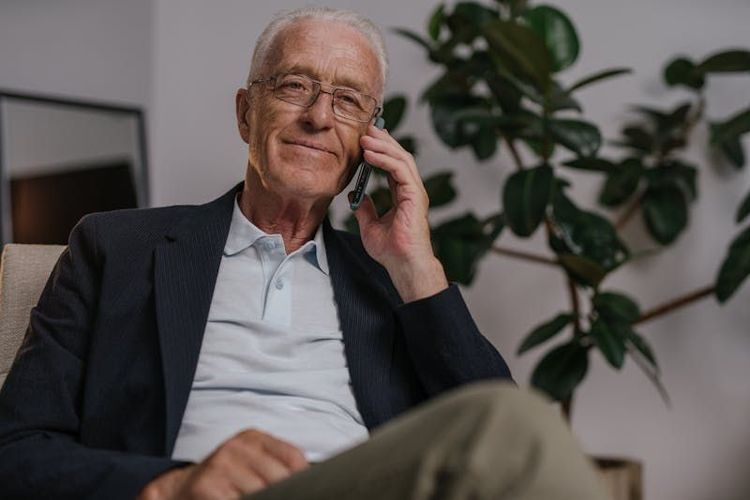
- A phone
- A familiar voice
- A predictable routine
Not every meaningful innovation needs a screen.
This is why solutions like HelloDear intentionally build around regular phone conversations — the most familiar technology of all — while using AI quietly behind the scenes to support clarity and consistency.
The experience feels human. The technology stays out of the way.
AI’s Best Role: Supporting, Not Replacing
There’s a growing fear that AI will replace human care. In reality, its most ethical role is far more modest — and far more powerful.
AI is best used to:
- Notice patterns humans can’t track every day
- Reduce repetitive administrative work
- Summarize information clearly
- Support decision-making without making decisions itself
It should never replace relationships, empathy, or judgment.
In thoughtful elder care systems, AI acts like a quiet assistant — not a decision-maker, not a monitor, and not a replacement for human connection.
Automation That Reduces Burden, Not Humanity
Care teams and families are often stretched thin.
The future of elder support must address:
- Documentation overload
- Missed information
- Emotional fatigue
- Fragmented communication
Automation can help — when it’s designed to lighten the load, not add complexity.
For example:
- Automatically summarizing conversations instead of requiring manual notes
- Highlighting gentle trends instead of triggering alarms
- Sharing clear weekly digests instead of constant notifications
HelloDear’s approach reflects this philosophy: using automation to bring clarity without noise, and consistency without control.
Ethical Design Starts With Consent and Transparency
Invisible technology must also be ethical technology.
That means:
- Clear consent from older adults
- Transparent explanations of what’s collected and why
- Explicit boundaries around medical claims
- Strong data protection standards
When people understand how a system works — and trust its intentions — technology becomes a partner instead of a threat.
Ethical AI in elder care isn’t just about compliance. It’s about respect.
Why “Gentle” Is the Right Direction
Gentle technology:
- Doesn’t rush
- Doesn’t judge
- Doesn’t alarm unnecessarily
- Doesn’t take control away
It observes patterns over time instead of reacting to single moments. It supports conversation instead of surveillance. It offers reassurance instead of constant intervention.
This gentleness is especially important in aging — a stage of life where autonomy, identity, and dignity matter deeply.
The Role of Humans Will Always Matter Most
No matter how advanced technology becomes, elder support will always depend on people:
- Families who care
- Professionals who listen
- Older adults who deserve to be heard
Technology should make these relationships stronger — not thinner.
The future isn’t about replacing care with AI. It’s about using AI to protect what makes care human.
A Future That Feels Calm, Not Clinical
As we look ahead, the most successful elder care systems won’t be the loudest or most complex.
They’ll be the ones that:
- Feel natural
- Respect independence
- Reduce uncertainty
- Stay mostly invisible
Gentle technology doesn’t announce itself. It simply makes life feel a little more supported.
One conversation at a time.